
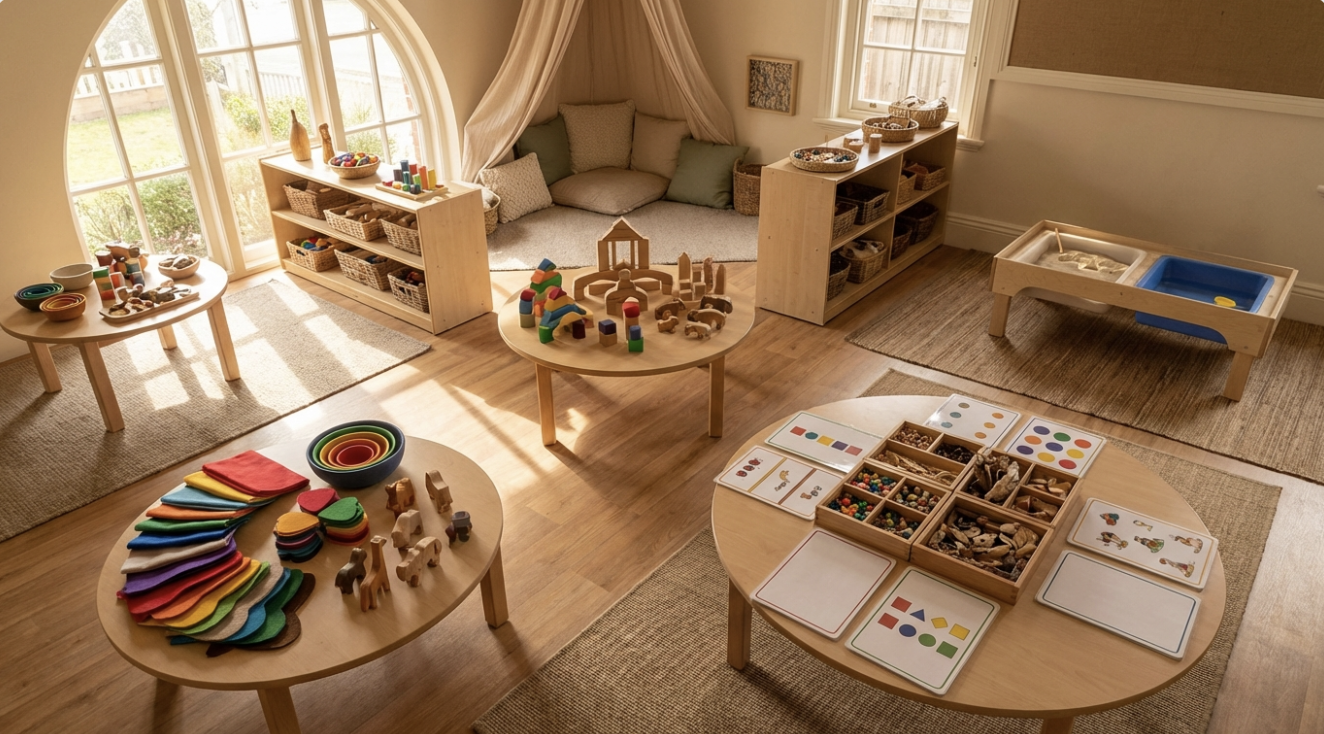
Nursery practitioners in the UK spend an average of four to six hours per week on activity planning alone — time that comes directly out of evenings, weekends, and the mental energy that should be reserved for children. That figure is not an anomaly. It is a structural problem embedded in how early years settings operate, and it is made worse by increasing regulatory pressure, staff shortages, and the expectation that every activity can be evidenced against the EYFS statutory framework. The tools most settings rely on — shared drives, recycled templates, Pinterest boards — were never designed for this level of accountability. They have a ceiling, and most practitioners have already hit it.
EYFS activity planning software like PlayPlan doesn’t just save time — it fundamentally shifts how practitioners spend their energy, moving administrative burden off their desks and back into the room where children actually learn. That is a meaningful distinction. The question is not simply whether software can speed up a task, but whether the right software can change what that task demands of the person doing it. This article examines what genuine planning support looks like in an early years context, how purpose-built tools differ from nursery management platforms, and what practitioners should weigh carefully before making a decision. The goal is not to sell a product — it is to give you a clear-eyed framework for evaluating whether a dedicated planning solution fits the specific pressures your setting faces.
The Planning Problem Nobody Talks About Openly
Ask any nursery practitioner how long activity planning actually takes each week, and the honest answer is rarely comfortable. For many, it’s four to six hours — time carved out of evenings and weekends because there simply isn’t space for it during the working day. That’s not a minor inconvenience. It’s a structural drain that quietly erodes both morale and effectiveness.
The pressure isn’t just about generating ideas. Ofsted expects practitioners to evidence intent, implementation, and impact across the EYFS framework. That documentation layer turns what might be a 20-minute task into something far more demanding — and far less enjoyable.
Staff shortages compound everything. When a setting runs lean, planning responsibilities don’t disappear — they consolidate onto fewer shoulders. One experienced practitioner ends up carrying the cognitive load for an entire room.
The real consequence is often invisible in performance reviews but obvious in practice: less time with children. When the person responsible for nurturing early development is buried in spreadsheets or scrolling Pinterest for inspiration, something has gone wrong structurally — not personally.
Many practitioners already use workarounds: shared drives, saved Pinterest boards, recycled templates from previous terms. These tools aren’t without value, but they lack EYFS alignment built in, offer no customisation based on cohort needs, and create inconsistency across teams. Purpose-built EYFS activity planning software exists precisely because these workarounds have a ceiling. Start your free trial today and see what planning looks like when the structure is already there.
Activity Planning Software vs. Nursery Management Software: Why the Distinction Matters
There’s a genuine confusion in the early years market right now. Platforms like Tapestry, Parenta, and Ovivio are excellent tools — but they’re built around a different problem. Their core functions are observation recording, developmental milestone tracking, parent communication, and billing. Activity planning, where it exists at all, is typically a secondary feature rather than the central design priority.
That distinction matters more than it might seem. A planning feature tucked inside a management suite is usually built to tick a box, not to support the actual workflow of a practitioner sitting down to plan tomorrow’s activities. It rarely offers structured curriculum alignment, differentiation suggestions, or the kind of creative scaffolding that makes planning genuinely faster and better.
Two Different Problems, Two Different Tools
Consider what a room leader actually needs at 4pm when they’re planning for the following morning:
- Structured activity ideas linked to EYFS learning goals
- Quick customisation based on children’s ages and current interests
- Outputs they can act on immediately, not forms to fill in
None of that requires an invoicing dashboard. EYFS activity planning software like PlayPlan is built around the practitioner’s workflow — not the manager’s administrative view. That’s a fundamentally different design brief.
This isn’t a criticism of nursery management platforms. They solve real problems. But conflating the two categories leads to poor purchasing decisions where practitioners end up with powerful billing tools and barely usable planning features. If activity planning is the bottleneck in your setting, it deserves a dedicated solution. Start your free trial today and see what purpose-built planning actually feels like.
What Good EYFS Activity Planning Software Actually Does
Most practitioners who’ve tried generic planning tools — or even some early years-specific ones — will recognise the frustration: the software gives you a blank template and a dropdown menu of EYFS areas, and the actual thinking is still entirely on you. That’s not planning support. That’s a digital version of the same paper forms you were already using.
Genuinely useful EYFS activity planning software doesn’t just organise your ideas — it generates substantive, usable plans that are already structured around the curriculum. The distinction matters enormously when you’re managing a room of children, tracking development across cohorts, and trying to stay on top of documentation requirements at the same time.
Generating Activities That Are Already Aligned — Not Just Tagged
There’s a meaningful difference between software that labels activities with EYFS areas after the fact and software that builds activities from the curriculum outward. Tagging is cosmetic. It tells you which area of learning an activity could plausibly relate to, but it doesn’t guarantee the activity is actually designed to progress development in that area.
PlayPlan’s AI generates plans that start from the curriculum — not from a generic activity bank. Each plan is built to include:
- Specific areas of learning and development (both prime and specific)
- Clear learning intent, so the purpose of the activity is explicit from the outset
- Implementation guidance that tells practitioners how to run the activity, not just what it is
- Anticipated outcomes, so you know what progress looks like before you start
This structure mirrors how experienced practitioners already think about quality planning — it just removes the time cost of building it from scratch every time.
Child-Specific Planning and SEND Adaptability
This is where most generic tools fall apart completely. A planning tool that produces the same activity for every child regardless of age, interest, or developmental need isn’t really serving practitioners — it’s serving itself.
PlayPlan allows practitioners to generate plans tailored to individual children, accounting for their current developmental stage, personal interests, and any SEND considerations. For a child with sensory processing differences, for example, a standard messy play activity might need significant structural adjustments to remain accessible and purposeful. Having those adaptations generated automatically — rather than worked out from scratch each time — is the kind of practical time-saving that actually changes how a setting operates.
This is also where purpose-built early years planning tools justify the investment over general-purpose alternatives.
Documentation Ready for Records and Ofsted
Planning and evidencing are two halves of the same administrative burden. Practitioners often spend as much time formatting and exporting documentation as they do creating it. PlayPlan produces exportable PDFs that contain the full planning record — intent, implementation, outcomes, and curriculum alignment — in a format that works directly for learning journeys, room records, and Ofsted inspection evidence.
That closes a gap that causes real stress in settings. When your planning documentation is inspection-ready as a by-product of your normal workflow, you’re not scrambling to compile evidence after the fact.
If this kind of structured, child-specific planning would change how your team works, start your free trial today and see how quickly you can build your first set of EYFS-aligned plans.
How Practitioners Are Actually Using PlayPlan Day-to-Day
The real test of any tool is whether it fits into the rhythm of a working nursery — not whether it looks good in a demo. Here’s how practitioners are actually integrating EYFS activity planning software into their day-to-day routines.
Monday Morning Planning
A room leader sits down before the children arrive. She needs a week’s worth of activities that reflect her current observations, cover the right areas of learning, and account for three children at different developmental stages. With PlayPlan, she generates a set of EYFS-aligned activities in minutes, adapts the ones that need tweaking, and saves them directly to the team’s shared library. The planning session that used to eat into her prep time is done before the kettle boils.
Last-Minute Cover Situations
A practitioner covering for a colleague needs activities ready within the hour. This is where a built-up activity library pays off. Rather than starting from scratch, she searches the saved plans, finds something appropriate, and gets into the room with confidence. The compounding effect is real: the more your team saves and organises activities over time, the less original planning is required week to week.
The Learning Curve — An Honest Take
New tools require adjustment. PlayPlan’s interface is built for practitioners, not software users, but it still takes a few sessions to build confidence. Most teams find their footing within the first week.
What practitioners consistently report isn’t just time saved — it’s mental space reclaimed. That shift allows more deliberate, present-focused interactions during sessions, which is where the real work of early years education happens.
If you’re ready to experience that shift firsthand, start your free trial today.
The Creativity Argument: Does AI Planning Stifle Practitioner Judgement?
This is the objection that comes up most often, and it deserves a direct answer: no, good EYFS activity planning software doesn’t reduce practitioners to passive executors. It does the opposite.
The blank-page problem is real. The hardest part of planning isn’t having ideas — it’s starting. Staring at an empty template at the end of a long session, trying to structure a cohesive activity from scratch, is where creative energy gets drained fastest. AI generation removes that friction entirely.
PlayPlan’s outputs are starting points, not scripts. Every generated plan is editable. Practitioners refine the language, adjust the challenge level, swap materials for what’s actually available in their setting, and layer in the specific interests of the children in front of them. That process is professional judgement — it’s just no longer slowed down by structural scaffolding.
Think about how other skilled professionals use tools. Architects don’t consider CAD software a threat to their design instincts. Teachers using lesson plan banks aren’t less capable — they’re more focused. The tool handles the framework; the expertise shapes the outcome.
Over time, practitioners using PlayPlan’s activity library build a curated bank of plans that genuinely reflect their setting’s culture and children’s preferences. That’s not passive consumption — that’s professional curation.
Start your free trial today and see how much more intentional your planning becomes when the blank page isn’t the enemy
Ofsted, EYFS Reform, and Why Planning Evidence Matters More Than Ever
The regulatory landscape for early years settings has shifted significantly. Under the Education Inspection Framework, Ofsted inspectors now focus heavily on curriculum intent — they want practitioners to articulate why an activity was chosen, not simply describe what children did. That’s a meaningful distinction, and many settings are underprepared for it.
The EYFS statutory framework requires planning that demonstrably connects activity to the seven areas of learning. Development Matters guidance reinforces this expectation. Settings that cannot produce clear, structured planning documentation are at a disadvantage during inspection — even when their actual practice with children is genuinely excellent. Good work without evidence is invisible to an inspector.
This is where EYFS activity planning software changes the professional equation. PlayPlan generates output that maps directly onto the intent-implementation-impact structure inspectors expect to see articulated. Each activity plan includes curriculum intent, how it will be implemented, and the expected developmental achievement — ready to export, share, and reference.
For practitioners already stretched thin, producing this level of documentation manually is the bottleneck. Removing that bottleneck doesn’t just reduce stress — it raises the quality of your paper trail to a professional standard. If you want to see how it works in practice, start your free trial today.
Getting Started: Making the Transition Without Disrupting Your Setting
The most common reason nursery teams delay adopting new software is timing — there’s never a “good” moment mid-term. The practical answer is to stop treating this as a full migration and start with a single session.
A Low-Friction Starting Point
Pick one room or one age group. Use the software to generate three to five activities for an upcoming week. Then do something specific: hold those outputs against your current planning documentation and honestly assess the quality, EYFS alignment, and time it took to get there. That comparison tells you more than any feature list.
Build the Habit From Day One
Save every generated activity from your first session. The EYFS activity library compounds quickly — within a few weeks, you’re pulling from a bank of ready-made plans rather than starting from scratch each time. That’s where the real time savings accumulate.
Make It a Team Tool, Not a Solo One
Planning software loses half its value if only one practitioner uses it. Involve your whole team early. Shared access means consistent documentation, broader input into what works, and less dependency on any single person’s availability.
PlayPlan offers a free trial — the lowest-risk way to evaluate fit before committing your setting. For nursery teams ready to reclaim planning time and strengthen their EYFS documentation, start your free trial today.
Making the Right Decision for Your Setting
The central argument of this article is straightforward, but worth stating plainly before you decide: the planning burden in early years settings is not a personal failing — it is a systemic problem that deserves a systemic solution. Practitioners who spend their evenings writing activity plans are not being inefficient. They are operating within a structure that allocates insufficient time for preparation and demands increasingly sophisticated documentation. A dedicated planning tool does not fix every pressure, but it removes one of the most consistent and solvable drains on professional time and energy.
The trade-offs are real and worth taking seriously. PlayPlan is not a nursery management system, and settings that primarily need stronger observation recording, parent communication, or billing functionality should evaluate whether a dedicated planning tool fits alongside their existing infrastructure — or whether a more integrated platform better serves their priorities. For settings where the primary bottleneck is the planning process itself, the case for a purpose-built solution is considerably stronger than for those where planning is already functioning adequately.
The distinction between software that organises your ideas and software that generates substantive, curriculum-aligned plans is the most important evaluation criterion in this category. If a tool still requires you to do the core intellectual work from a blank page, it has not solved the problem — it has redecorated it. The strongest signal that software is genuinely useful is whether practitioners report not just faster planning, but a qualitative shift in how they engage with children during sessions. That is the measure that matters in early years work.
Settings facing Ofsted inspections in the near term have additional reason to prioritise this now. The intent-implementation-impact framework is not going away, and the gap between excellent practice and evidenced practice is exactly where good documentation tools have the most to offer. If your setting’s work with children is strong but your paper trail is not, closing that gap is both a professional obligation and a practical priority.
For nursery teams ready to make that shift, the lowest-risk starting point remains a free trial evaluated honestly against your current planning workflow. The question is not whether the technology is capable — it is whether it fits your setting’s specific pressures well enough to change how your team works. That is a question only you can answer, and the only way to answer it properly is to try it for real.